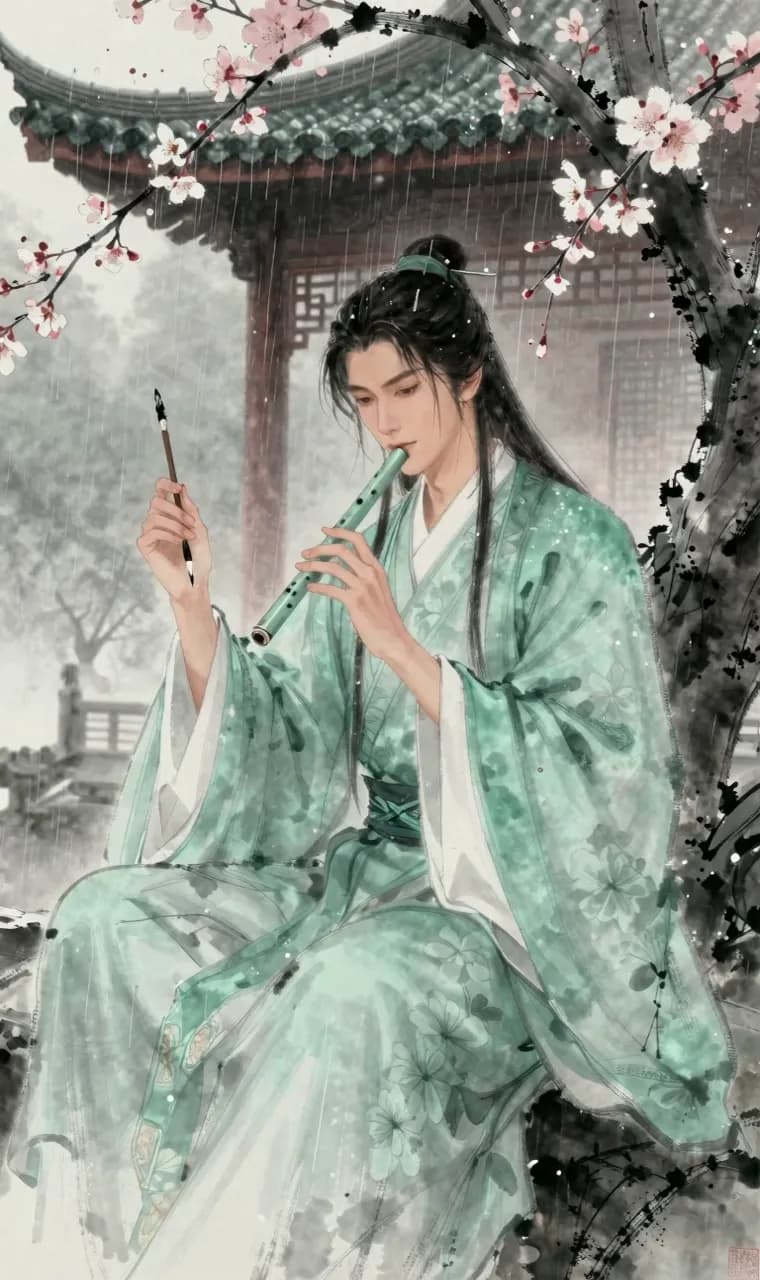
听雨 (Tīngyǔ)
Tīngyǔ
Listening To Rain
Meaning & Cultural Context
Finding peace in the sound of rain on a temple roof. A warrior who has learned stillness through contemplation.
📖Cultural Background
Listening to rain (听雨) is a cherished motif in Chinese aesthetics, representing mindfulness and tranquility. The poet Jiang Jie's famous lines 'Listen to rain falling on the steps' capture a lifetime of reflection. In wuxia, a warrior who listens to rain embodies inner peace amidst chaos—often a hermit or retired master. This name is perfect for a contemplative character, perhaps a monk or a strategist who finds clarity in sound. It suggests wisdom earned through stillness, not action.
Want a personalized Chinese name? Try our name generator!
Generate MineComprehensive Name Score
Each character has deep cultural significance with rich poetic and historical references
Two-character name has good tonal rhythm. Moderate tonal variation. Adjacent syllables have well-contrasted tones
Balanced stroke complexity with elegant structure. Characters have well-balanced stroke counts
Single five-element attribute (water), pure but limited in variety
Two-character name feels modern and stylish
Classical Poetry References
This name carries echoes of classical Chinese poetry:
「好雨知时节,当春乃发生。随风潜入夜,润物细无声」
The good rain knows its season; when spring arrives, it brings life. It steals into the night with the wind, nourishing all things silently and gently
— Du Fu, 'Joyful Rain on a Spring Night'
The good rain knows when to fall, arriving with spring. It slips into the night on a gentle breeze, nourishing all things without a sound — silent, selfless giving.
「清明时节雨纷纷,路上行人欲断魂」
During Qingming Festival, the rain falls in drizzling threads; pedestrians on the road look utterly forlorn
— Du Mu, 'Qingming'
A misty rain falls thickly on Qingming Day; travelers on the road are lost in mournful thought — the melancholy of spring rain.
Character Evolution
Explore how each character evolved over 3000+ years of Chinese writing history.
In oracle bone script,「雨」depicts raindrops falling from the sky — the horizontal line above represents the heavens, and the descending dots represent raindrops.
In bronze script, the raindrops in「雨」became denser and more vivid.
In seal script, the vertical line in「雨」represents rain falling from heaven, and the four dots represent raindrops. The 'Shuowen' explains: 'Yu is water descending from clouds.'
From oracle bone script to today,「雨」underwent abstraction, but the core imagery of 'rain falling from heaven' remains unchanged. 'Good rain knows its season' — rain nourishes all things. Using「雨」in a name expresses gentle warmth and nurturing care.
When to Use This Name
Frequently Asked Questions
What does the Chinese name 听雨 (Tīngyǔ) mean?
听雨 (Tīngyǔ) means "Listening To Rain" in Chinese. Finding peace in the sound of rain on a temple roof. A warrior who has learned stillness through contemplation.
How do you pronounce 听雨 in Chinese?
听雨 is pronounced "Tīngyǔ" in Mandarin Chinese. Practice each syllable's tone carefully for accurate pronunciation.
When should I use the name 听雨?
听雨 is a versatile Chinese name suitable for gaming usernames, social media profiles, language learning, and creative writing.
Zodiac Compatibility
Check which zodiac signs pair well with this name based on character radicals.