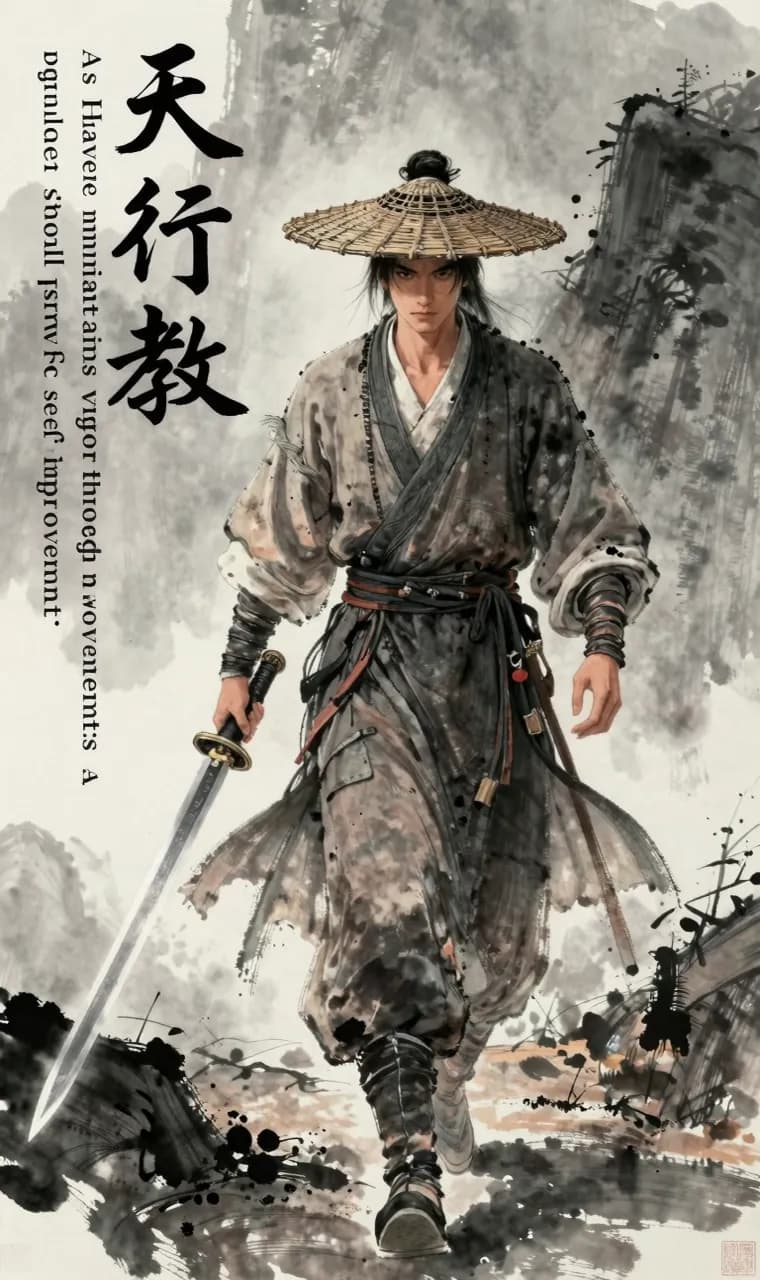
天行 (Tiānxíng)
Tiānxíng
Walking The Heavens
Meaning & Cultural Context
From the I Ching: 'As Heaven maintains vigor through movements, a gentleman should constantly strive for self-improvement.'
📖Cultural Background
天行 (Tiānxíng) is directly drawn from the I Ching (易经): '天行健,君子以自强不息' (As Heaven's movement is ever vigorous, the noble person constantly strives for self-improvement). This phrase has inspired countless scholars and warriors in Chinese history, embodying relentless effort and moral integrity. The name suggests a person of lofty ambitions and unyielding spirit, like a sky-walker. It's a powerful choice for a hero in a wuxia novel, a motivational username, or a brand name for fitness or education. 'Heaven' represents ultimate authority and nature, while 'walking' implies active pursuit.
Want a personalized Chinese name? Try our name generator!
Generate MineComprehensive Name Score
Each character has deep cultural significance with rich poetic and historical references
Two-character name has good tonal rhythm. Moderate tonal variation. Adjacent syllables have well-contrasted tones. Syllable lengths are balanced and easy to pronounce
Moderate stroke count
No five-element data available.
Two-character name feels modern and stylish. Low total stroke count is minimalist and easy to write
Classical Poetry References
This name carries echoes of classical Chinese poetry:
「天生我材必有用,千金散尽还复来」
Heaven has given me this talent for a purpose; a thousand pieces of gold scattered will return again
— Li Bai, 'Bring in the Wine'
Heaven endowed me with talent that must serve a purpose; though a fortune be spent, it will come back — confidence and boundless spirit.
「天行健,君子以自强不息」
As heaven's motion is vigorous and unceasing, the gentleman strives endlessly for self-improvement
— I Ching (Book of Changes)
Heaven moves with vigor and never ceases; the gentleman should emulate this by ceaselessly striving for self-improvement.
Character Evolution
Explore how each character evolved over 3000+ years of Chinese writing history.
In oracle bone script,「天」depicts a standing human figure viewed from the front, with the head prominently emphasized — its original meaning is 'the top of the head.'
In bronze script,「天」began to extend from 'top of the head' to 'the sky,' with the head replaced by a horizontal stroke, forming the structure of「一」above「大」(great).
In seal script,「天」has「一」(one) above and「大」(great) below. The 'Shuowen' explains: 'Tian means the summit — the highest, with nothing above it.'
From the emphasized head of a human figure in oracle bone script, to the「一+大」composition after bronze script — 'the great One is Heaven' —「天」completed its elevation from a body part to the supreme cosmic entity.
When to Use This Name
Frequently Asked Questions
What does the Chinese name 天行 (Tiānxíng) mean?
天行 (Tiānxíng) means "Walking The Heavens" in Chinese. From the I Ching: 'As Heaven maintains vigor through movements, a gentleman should constantly strive for self-improvement.'
How do you pronounce 天行 in Chinese?
天行 is pronounced "Tiānxíng" in Mandarin Chinese. Practice each syllable's tone carefully for accurate pronunciation.
When should I use the name 天行?
天行 is a versatile Chinese name suitable for gaming usernames, social media profiles, language learning, and creative writing.
Zodiac Compatibility
Check which zodiac signs pair well with this name based on character radicals.