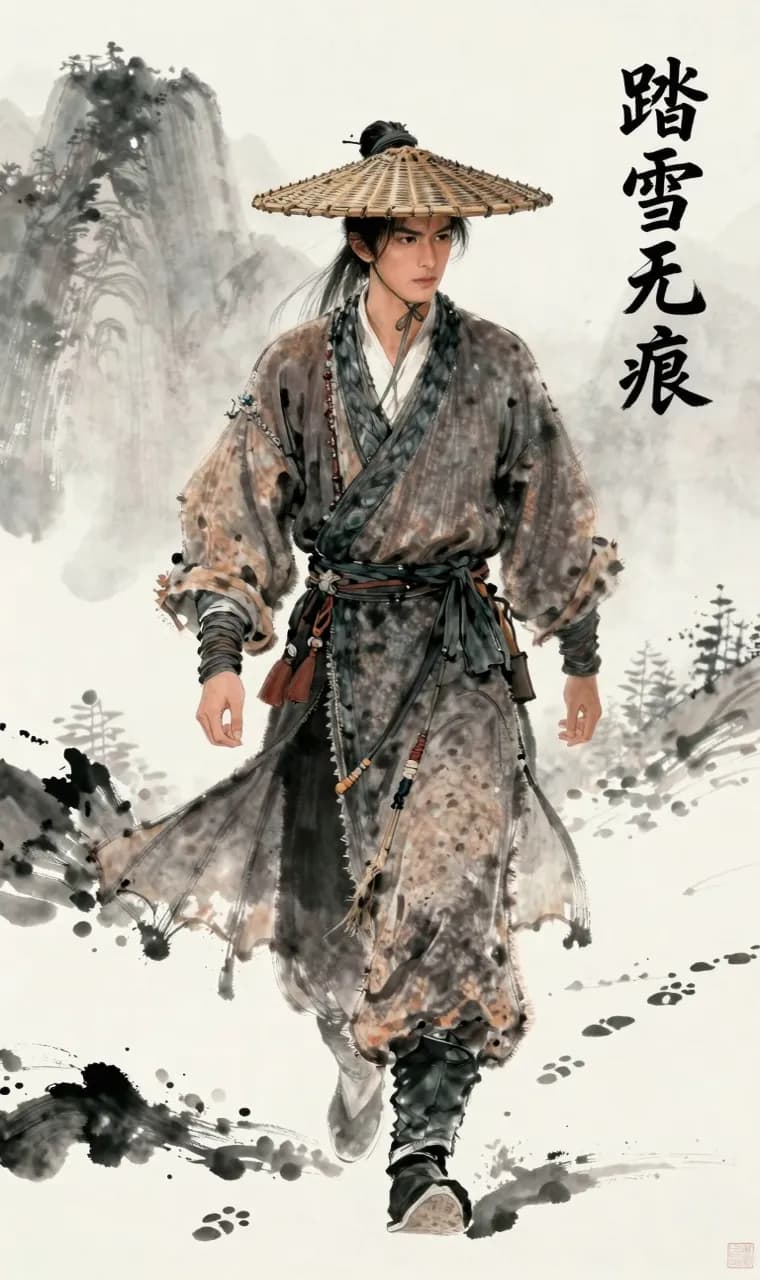
踏雪 (Tàxuě)
Tàxuě
Treading Snow
Meaning & Cultural Context
Walking across snow without leaving footprints — the ultimate expression of qinggong (lightness skill).
📖Cultural Background
踏雪 (Tàxuě) evokes the legendary qinggong (轻功) of wuxia fiction, where masters can walk on snow without leaving footprints—a symbol of supreme martial skill and ethereal grace. The name appears in classic tales like 'The Legend of the Condor Heroes,' where lightness is both a physical feat and a metaphor for freedom from worldly burdens. It's perfect for a gaming alias (especially for agile characters), a poetic social media handle, or even a stage name for dancers or acrobats. Culturally, snow represents purity and transience, while 'treading' implies deliberate, effortless action—a balance of strength and delicacy.
Want a personalized Chinese name? Try our name generator!
Generate MineComprehensive Name Score
Each character has deep cultural significance with rich poetic and historical references
Two-character name has good tonal rhythm. Moderate tonal variation. Adjacent syllables have well-contrasted tones
Balanced stroke complexity with elegant structure. Characters have well-balanced stroke counts
Single five-element attribute (water), pure but limited in variety
Two-character name feels modern and stylish
Classical Poetry References
This name carries echoes of classical Chinese poetry:
「忽如一夜春风来,千树万树梨花开」
As if a spring breeze swept through the night, ten thousand pear trees burst into bloom
— Cen Shen, 'Song of White Snow in Farewell to Secretary Wu'
As if overnight a spring breeze arrived and ten thousand pear trees blossomed — the immortal verse comparing winter snow to spring flowers.
「孤舟蓑笠翁,独钓寒江雪」
An old man in a straw raincoat and bamboo hat in a lone boat, fishing alone on the cold snowy river
— Liu Zongyuan, 'River Snow'
A lone boat, an old man in a rain hat, fishing alone on a freezing river — an image of noble solitude.
「梅须逊雪三分白,雪却输梅一段香」
The plum blossom yields to the snow in whiteness, but the snow falls short of the plum's fragrance
— Lu Meipo, 'Snow and Plum'
The plum blossom cannot match the snow's pure white, and the snow lacks the plum's sweet fragrance — each has its own strengths.
Character Evolution
Explore how each character evolved over 3000+ years of Chinese writing history.
In oracle bone script,「雪」has「雨」(rain) above and「彗」(broom) below — meaning rain that can be swept, i.e., snow.
In bronze script,「雪」continues the oracle bone structure, depicting snowflakes falling beneath rain.
In seal script,「雪」has「雨」above and「彗」below. The 'Shuowen' explains: 'Xue is frozen rain that delights all things' — condensed rainwater that brings joy to the world.
From 'sweepable rain' in oracle bone script, to the rich cultural connotations of 'as clever as ice and snow' and 'sending charcoal in snowy weather' —「雪」in a name symbolizes purity, intelligence, and noble character.
When to Use This Name
Frequently Asked Questions
What does the Chinese name 踏雪 (Tàxuě) mean?
踏雪 (Tàxuě) means "Treading Snow" in Chinese. Walking across snow without leaving footprints — the ultimate expression of qinggong (lightness skill).
How do you pronounce 踏雪 in Chinese?
踏雪 is pronounced "Tàxuě" in Mandarin Chinese. Practice each syllable's tone carefully for accurate pronunciation.
When should I use the name 踏雪?
踏雪 is a versatile Chinese name suitable for gaming usernames, social media profiles, language learning, and creative writing.
Zodiac Compatibility
Check which zodiac signs pair well with this name based on character radicals.