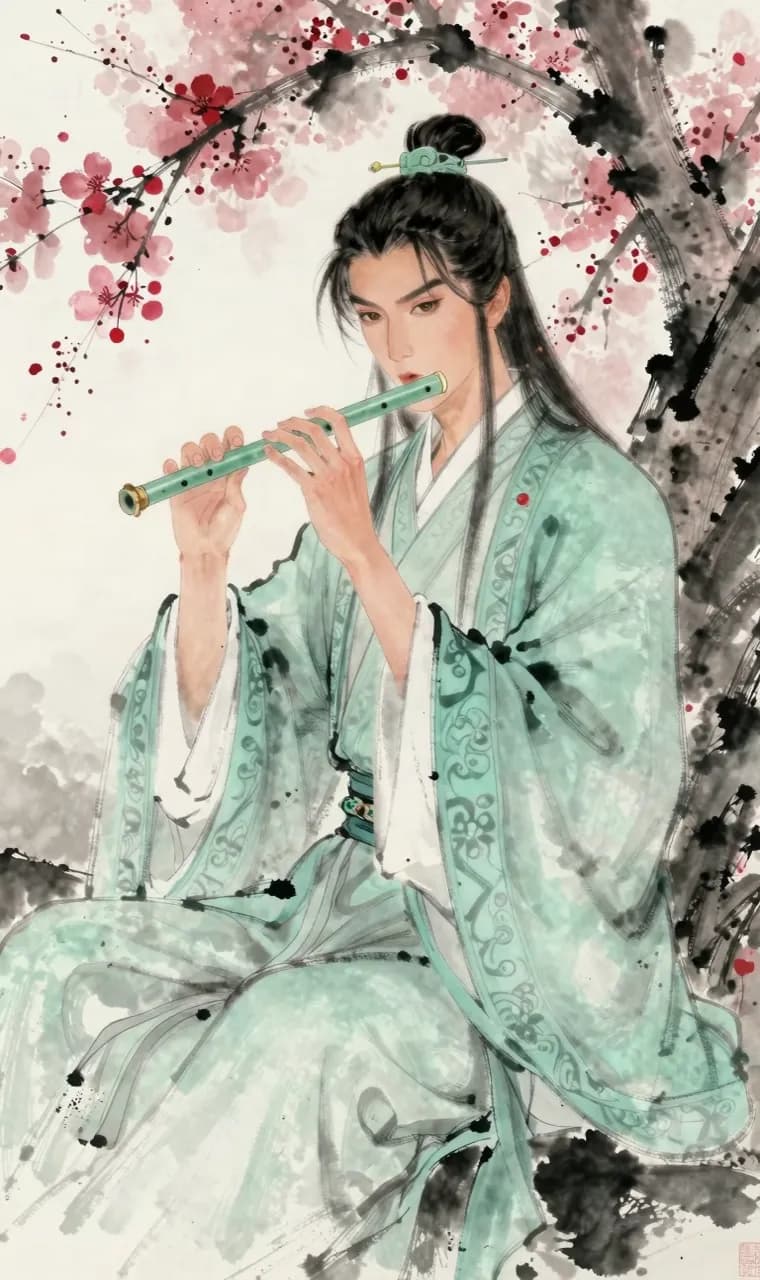
诗酒 (Shījiǔ)
Shījiǔ
Poetry And Wine
Meaning & Cultural Context
The two great companions of the Chinese literati. A name for someone who lives for art and celebration.
📖Cultural Background
Shijiu (诗酒) combines 'poetry' and 'wine,' the two inseparable companions of the Chinese literati. From Li Bai, the 'Immortal Poet' who drowned in a river after reaching for the moon's reflection, to Du Fu, wine fueled creativity and solace. This name embodies a life of artistic passion and carefree spirit. In wuxia, it suits a wandering poet-swordsman who recites verses between duels. It suggests a character who finds truth in intoxication and beauty in words—a romantic idealist.
Want a personalized Chinese name? Try our name generator!
Generate MineComprehensive Name Score
Each character has deep cultural significance with rich poetic and historical references
Two-character name has good tonal rhythm. Moderate tonal variation. Adjacent syllables have well-contrasted tones. Syllable lengths are balanced and easy to pronounce
Moderate stroke count
No five-element data available.
Two-character name feels modern and stylish
Classical Poetry References
This name carries echoes of classical Chinese poetry:
「不读诗,无以言」
Without studying poetry, one cannot speak well
— The Analects, 'The Ji Family'
Without studying the Book of Songs, one cannot even speak properly — Confucius's emphasis on the importance of poetry education.
「诗是吾家事,人传世上情」
Poetry is my family's calling; through it people convey the feelings of the world
— Du Fu, 'For Zongwu's Birthday'
Poetry is our family heritage; through it, people express the truest emotions of the world — the legacy of the Poetry Sage.
Character Evolution
Explore how each character evolved over 3000+ years of Chinese writing history.
No form of「诗」has been found in oracle bone script.
In bronze script,「诗」combines「言」(speech) and「寺」(which carries the sense of order and regulation), meaning speech with rhythmic and metrical patterns — poetry.
In seal script,「诗」has「言」on the left and「寺」on the right. The 'Shuowen' explains: 'Shi means aspiration — from speech, with寺 as sound.' The 'Great Preface to the Classic of Poetry' states: 'Poetry is where the mind goes — in the heart it is aspiration, in words it becomes poetry.'
「诗」combines speech and order — regulated, measured speech is poetry. 'Poetry expresses aspiration' — it is the highest form of Chinese literature. Using「诗」in a name signifies abundant literary talent and a vivid, refined spirit.
When to Use This Name
Frequently Asked Questions
What does the Chinese name 诗酒 (Shījiǔ) mean?
诗酒 (Shījiǔ) means "Poetry And Wine" in Chinese. The two great companions of the Chinese literati. A name for someone who lives for art and celebration.
How do you pronounce 诗酒 in Chinese?
诗酒 is pronounced "Shījiǔ" in Mandarin Chinese. Practice each syllable's tone carefully for accurate pronunciation.
When should I use the name 诗酒?
诗酒 is a versatile Chinese name suitable for gaming usernames, social media profiles, language learning, and creative writing.
Zodiac Compatibility
Check which zodiac signs pair well with this name based on character radicals.