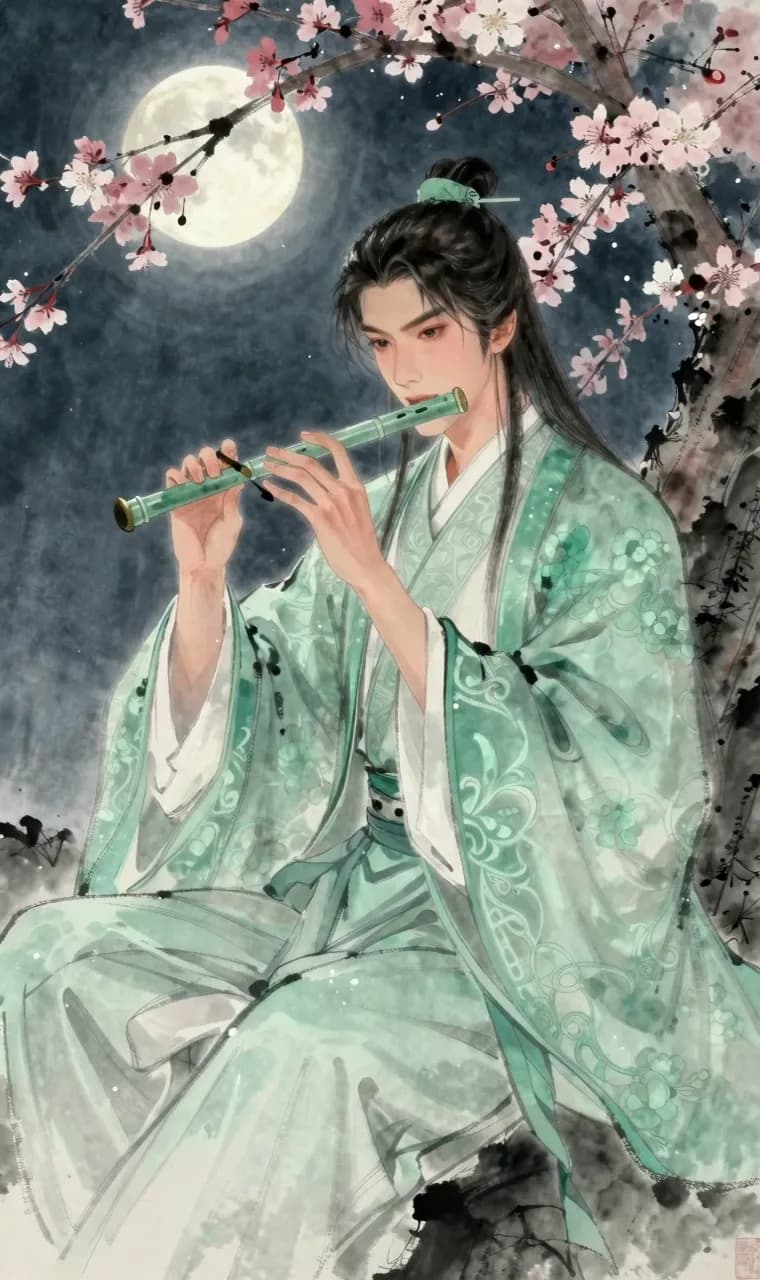
明月 (Míngyuè)
Míngyuè
Bright Moon
Meaning & Cultural Context
The moon that illuminates the jianghu night. A symbol of longing, reunion, and the shared sky above all wanderers.
📖Cultural Background
In Chinese culture, 'bright moon' (明月) is a timeless poetic image, appearing in classics like Li Bai's 'Thoughts on a Quiet Night' where moonlight evokes homesickness. In wuxia novels, the moon is a silent witness to martial artists' duels and wanderings, symbolizing both clarity and melancholy. This name suits a character in a jianghu setting—a lone swordsman or a female assassin who moves under moonlight. It carries connotations of purity, transience, and shared longing, making it ideal for a name that feels both ethereal and grounded.
Want a personalized Chinese name? Try our name generator!
Generate MineComprehensive Name Score
Each character has deep cultural significance with rich poetic and historical references
Two-character name has good tonal rhythm. Moderate tonal variation. Adjacent syllables have well-contrasted tones. Syllable lengths are balanced and easy to pronounce
Moderate stroke count
Single five-element attribute (fire), pure but limited in variety
Two-character name feels modern and stylish. Low total stroke count is minimalist and easy to write
Classical Poetry References
This name carries echoes of classical Chinese poetry:
「床前明月光,疑是地上霜」
Before my bed, a pool of moonlight; I wonder if it is frost upon the ground
— Li Bai, 'Quiet Night Thoughts'
Moonlight spills before my bed like a layer of frost — the most widely known Chinese poem of all time.
「明月几时有?把酒问青天」
When did the bright moon first appear? I raise my cup and ask the blue sky
— Su Shi, 'Water Melody'
When did the bright moon first arise? I raise my wine cup to ask the heavens — the eternal masterpiece for the Mid-Autumn Festival.
「山重水复疑无路,柳暗花明又一村」
Through endless mountains and winding rivers, I fear there is no way ahead; then through dark willows and bright flowers, another village appears
— Lu You, 'Visiting a Village West of the Mountain'
Just when the mountains and streams seem to block all paths, a village suddenly appears beyond the willows and flowers — hope found in the darkest moment.
Character Evolution
Explore how each character evolved over 3000+ years of Chinese writing history.
In oracle bone script,「明」has two forms: one combining「日」(sun) and「月」(moon) — sun and moon shining together — and another combining「囧」(window) and「月」(moon) — moonlight streaming through a window. Both express the meaning of brightness.
In bronze script, the「日+月」form became the dominant version of「明」— sun and moon appearing together, symbolizing the brightest sources of light in heaven and earth.
In seal script,「明」is composed of「日」(sun) and「月」(moon) side by side. The combined radiance of sun and moon is the greatest illumination. The 'Shuowen' explains: 'Ming means to illuminate.'
Since oracle bone script,「明」has been a combination of sun and moon — what could be brighter than both appearing at once? Using「明」in a name symbolizes intelligence, brightness, and a brilliant future.
When to Use This Name
Frequently Asked Questions
What does the Chinese name 明月 (Míngyuè) mean?
明月 (Míngyuè) means "Bright Moon" in Chinese. The moon that illuminates the jianghu night. A symbol of longing, reunion, and the shared sky above all wanderers.
How do you pronounce 明月 in Chinese?
明月 is pronounced "Míngyuè" in Mandarin Chinese. Practice each syllable's tone carefully for accurate pronunciation.
When should I use the name 明月?
明月 is a versatile Chinese name suitable for gaming usernames, social media profiles, language learning, and creative writing.
Zodiac Compatibility
Check which zodiac signs pair well with this name based on character radicals.