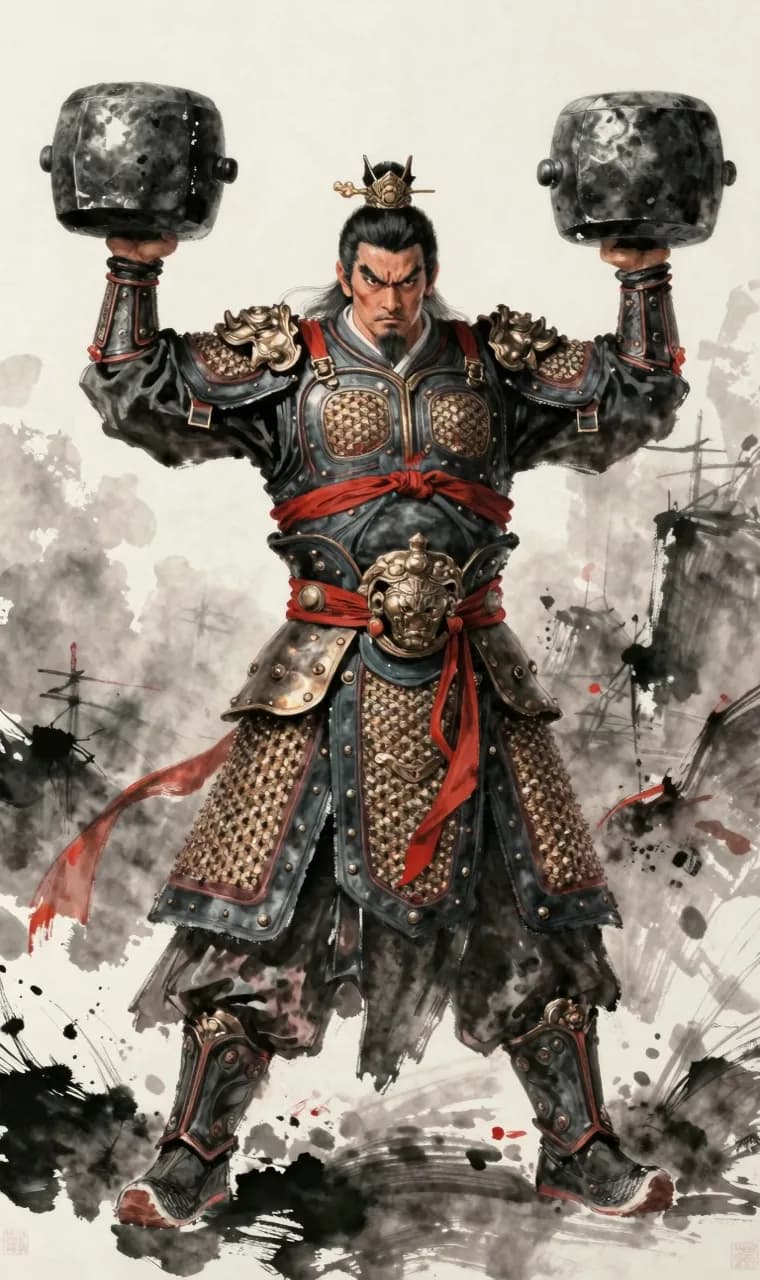
霸王 (Bàwáng)
Bàwáng
Hegemon King
Meaning & Cultural Context
From the legendary Xiang Yu, the Hegemon-King of Western Chu. A name of absolute authority and indomitable will.
📖Cultural Background
霸王 (Bàwáng) directly references Xiang Yu, the Hegemon-King of Western Chu, a tragic hero of the Chu–Han Contention. Known for his superhuman strength and pride, his story ends in defeat and suicide at the Battle of Gaixia. This name embodies absolute power, indomitable will, and a fatal flaw of arrogance. It's suitable for a dominant warrior in games or novels, but carries a cautionary note of hubris. In modern contexts, it might be used for a competitive gamer or a leader with a strong personality.
Want a personalized Chinese name? Try our name generator!
Generate MineComprehensive Name Score
Contains culturally rich characters with traceable literary origins
Two-character name has good tonal rhythm. Moderate tonal variation. Adjacent syllables have well-contrasted tones
Moderate stroke count
No five-element data available.
Two-character name feels modern and stylish. Low total stroke count is minimalist and easy to write
When to Use This Name
Frequently Asked Questions
What does the Chinese name 霸王 (Bàwáng) mean?
霸王 (Bàwáng) means "Hegemon King" in Chinese. From the legendary Xiang Yu, the Hegemon-King of Western Chu. A name of absolute authority and indomitable will.
How do you pronounce 霸王 in Chinese?
霸王 is pronounced "Bàwáng" in Mandarin Chinese. Practice each syllable's tone carefully for accurate pronunciation.
When should I use the name 霸王?
霸王 is a versatile Chinese name suitable for gaming usernames, social media profiles, language learning, and creative writing.