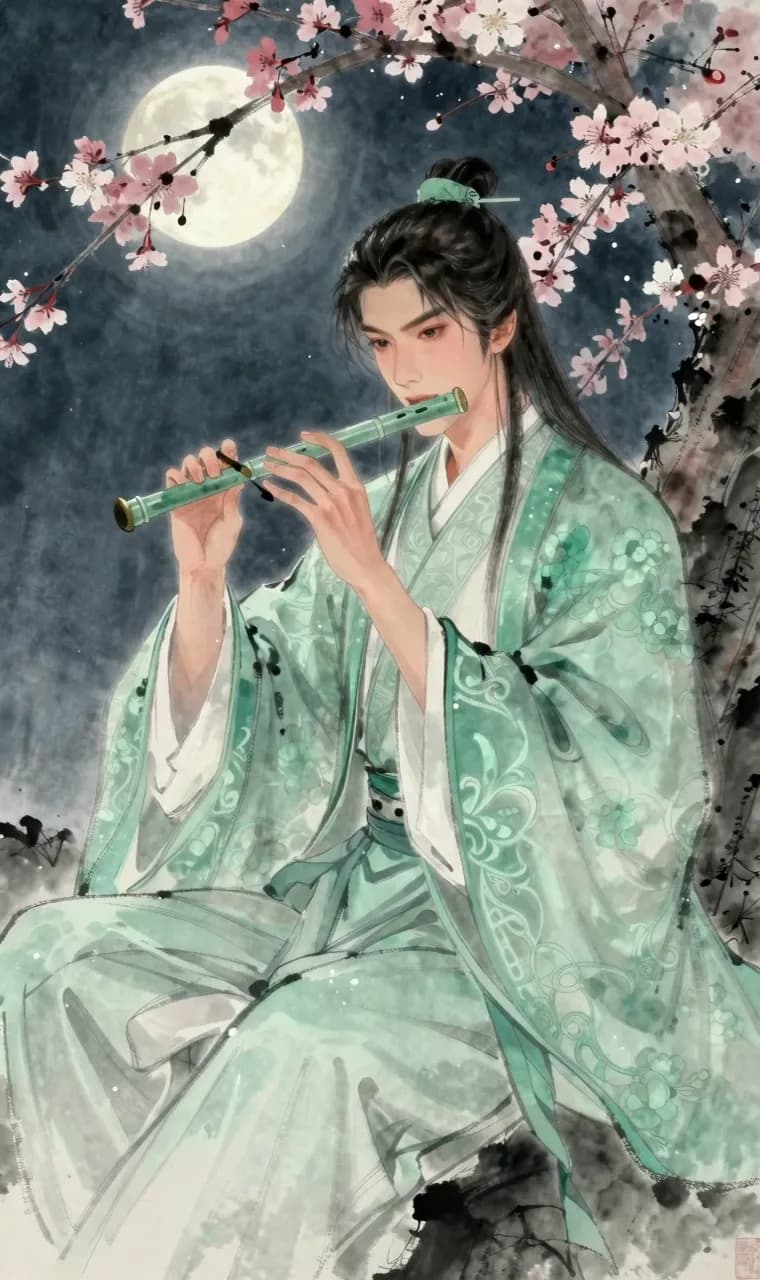
明月 (Míngyuè)
Míngyuè
Lua Brilhante
Significado e Contexto Cultural
A lua que ilumina a noite do jianghu. Um símbolo de saudade, reunião e do céu compartilhado por todos os andarilhos.
📖Contexto Cultural
Na cultura chinesa, a 'lua brilhante' é uma imagem poética atemporal, aparecendo em clássicos como 'Pensamentos em uma noite tranquila' de Li Bai, onde o luar evoca saudades de casa. Nos romances wuxia, a lua é uma testemunha silenciosa dos duelos e andanças dos artistas marciais, simbolizando clareza e melancolia. Este nome se adequa a um personagem em um cenário jianghu – um espadachim solitário ou uma assassina que se move sob o luar. Carrega conotações de pureza, transitoriedade e saudade compartilhada, tornando-o ideal para um nome que parece etéreo e ao mesmo tempo fundamentado.
Quer um nome chinês personalizado? Experimente nosso gerador!
Gerar o MeuPontuação abrangente do nome
Each character has deep cultural significance with rich poetic and historical references
Two-character name has good tonal rhythm. Moderate tonal variation. Adjacent syllables have well-contrasted tones. Syllable lengths are balanced and easy to pronounce
Moderate stroke count
Single five-element attribute (fire), pure but limited in variety
Two-character name feels modern and stylish. Low total stroke count is minimalist and easy to write
Referências de poesia clássica
Este nome carrega ecos da poesia clássica chinesa:
「床前明月光,疑是地上霜」
Before my bed, a pool of moonlight; I wonder if it is frost upon the ground
— Li Bai, 'Quiet Night Thoughts'
Moonlight spills before my bed like a layer of frost — the most widely known Chinese poem of all time.
「明月几时有?把酒问青天」
When did the bright moon first appear? I raise my cup and ask the blue sky
— Su Shi, 'Water Melody'
When did the bright moon first arise? I raise my wine cup to ask the heavens — the eternal masterpiece for the Mid-Autumn Festival.
「山重水复疑无路,柳暗花明又一村」
Through endless mountains and winding rivers, I fear there is no way ahead; then through dark willows and bright flowers, another village appears
— Lu You, 'Visiting a Village West of the Mountain'
Just when the mountains and streams seem to block all paths, a village suddenly appears beyond the willows and flowers — hope found in the darkest moment.
Evolução do caractere
Explore como cada caractere evoluiu ao longo de mais de 3000 anos de história da escrita chinesa.
In oracle bone script,「明」has two forms: one combining「日」(sun) and「月」(moon) — sun and moon shining together — and another combining「囧」(window) and「月」(moon) — moonlight streaming through a window. Both express the meaning of brightness.
In bronze script, the「日+月」form became the dominant version of「明」— sun and moon appearing together, symbolizing the brightest sources of light in heaven and earth.
In seal script,「明」is composed of「日」(sun) and「月」(moon) side by side. The combined radiance of sun and moon is the greatest illumination. The 'Shuowen' explains: 'Ming means to illuminate.'
Since oracle bone script,「明」has been a combination of sun and moon — what could be brighter than both appearing at once? Using「明」in a name symbolizes intelligence, brightness, and a brilliant future.
Quando Usar Este Nome
Perguntas frequentes
O que significa o nome chinês 明月 (Míngyuè)?
明月 (Míngyuè) significa "Lua Brilhante" em chinês. A lua que ilumina a noite do jianghu. Um símbolo de saudade, reunião e do céu compartilhado por todos os andarilhos.
Como se pronuncia 明月 em chinês?
明月 se pronuncia "Míngyuè" em chinês mandarim. Pratique cuidadosamente o tom de cada sílaba para uma pronúncia precisa.
Quando devo usar o nome 明月?
明月 é um nome chinês versátil, adequado para nomes de usuário em jogos, perfis de redes sociais, aprendizado de idiomas e escrita criativa.
Compatibilidade zodiacal
Verifique quais signos zodiacais combinam bem com este nome com base nos radicais dos caracteres.