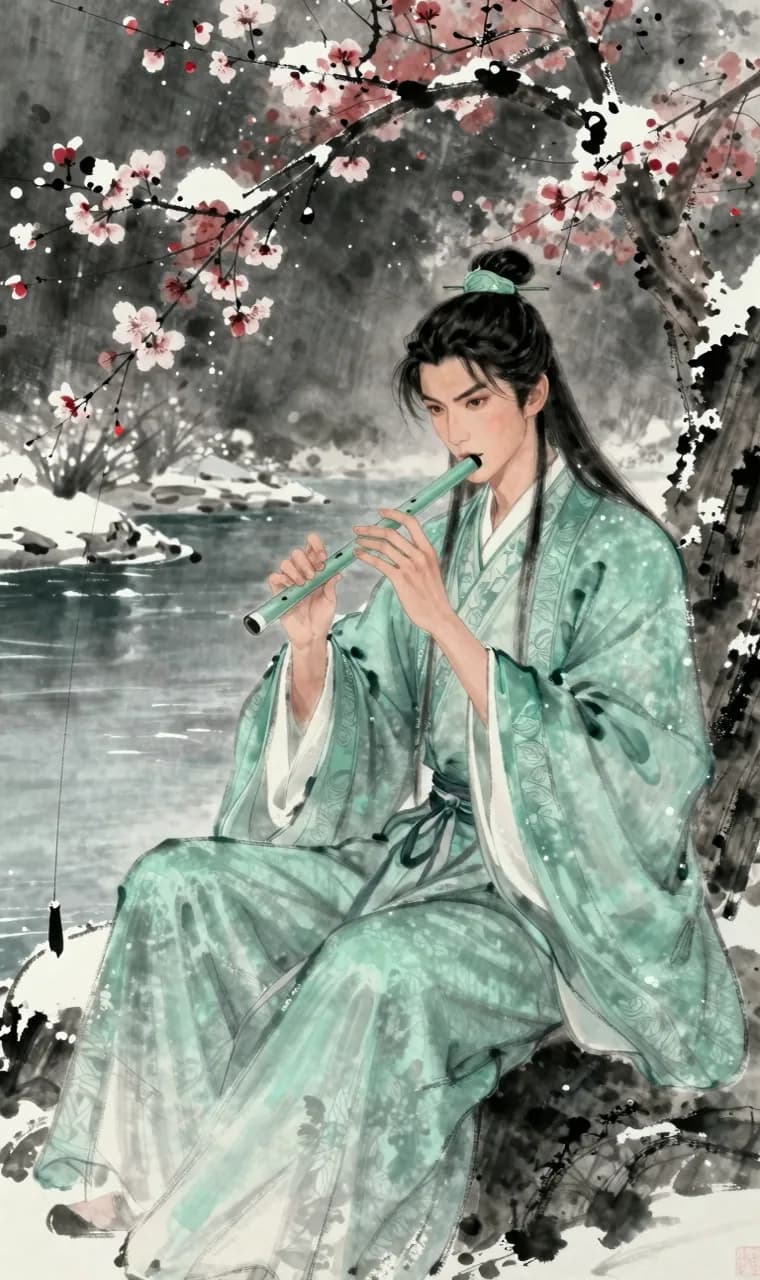
寒江雪 (Hánjiāng Xuě)
Hánjiāng Xuě
Neve no Rio Frio
Significado e Contexto Cultural
Inspirado no famoso poema. Uma figura solitária pescando em um rio coberto de neve — sereno e poderoso.
📖Contexto Cultural
Este nome é diretamente retirado do famoso poema da dinastia Tang 'Neve no Rio' (江雪) de Liu Zongyuan: 'Mil montanhas sem pássaros em voo, dez mil caminhos sem vestígio de pessoas. Um barco solitário, um velho em capa de palha e chapéu, pescando sozinho na neve do rio frio.' Evoca uma imagem poderosa de solidão, resiliência e desafio sereno contra condições adversas. Perfeito para um personagem em jogos wuxia ou literatura que seja um guerreiro solitário ou eremita. O nome carrega uma sensação de força silenciosa e melancolia poética.
Quer um nome chinês personalizado? Experimente nosso gerador!
Gerar o MeuPontuação abrangente do nome
Each character has deep cultural significance with rich poetic and historical references
Multi-character name has rich tonal layering. Rich tonal variety with musical quality. Adjacent syllables have well-contrasted tones. Syllable lengths are balanced and easy to pronounce
Balanced stroke complexity with elegant structure. Characters have well-balanced stroke counts
Diverse five-element combination with mutually beneficial properties. Characters have mutually generating five-element flow
Three-character name has a traditional, grounded feel
Referências de poesia clássica
Este nome carrega ecos da poesia clássica chinesa:
「忽如一夜春风来,千树万树梨花开」
As if a spring breeze swept through the night, ten thousand pear trees burst into bloom
— Cen Shen, 'Song of White Snow in Farewell to Secretary Wu'
As if overnight a spring breeze arrived and ten thousand pear trees blossomed — the immortal verse comparing winter snow to spring flowers.
「孤舟蓑笠翁,独钓寒江雪」
An old man in a straw raincoat and bamboo hat in a lone boat, fishing alone on the cold snowy river
— Liu Zongyuan, 'River Snow'
A lone boat, an old man in a rain hat, fishing alone on a freezing river — an image of noble solitude.
「梅须逊雪三分白,雪却输梅一段香」
The plum blossom yields to the snow in whiteness, but the snow falls short of the plum's fragrance
— Lu Meipo, 'Snow and Plum'
The plum blossom cannot match the snow's pure white, and the snow lacks the plum's sweet fragrance — each has its own strengths.
Evolução do caractere
Explore como cada caractere evoluiu ao longo de mais de 3000 anos de história da escrita chinesa.
In oracle bone script,「雪」has「雨」(rain) above and「彗」(broom) below — meaning rain that can be swept, i.e., snow.
In bronze script,「雪」continues the oracle bone structure, depicting snowflakes falling beneath rain.
In seal script,「雪」has「雨」above and「彗」below. The 'Shuowen' explains: 'Xue is frozen rain that delights all things' — condensed rainwater that brings joy to the world.
From 'sweepable rain' in oracle bone script, to the rich cultural connotations of 'as clever as ice and snow' and 'sending charcoal in snowy weather' —「雪」in a name symbolizes purity, intelligence, and noble character.
Quando Usar Este Nome
Perguntas frequentes
O que significa o nome chinês 寒江雪 (Hánjiāng Xuě)?
寒江雪 (Hánjiāng Xuě) significa "Neve no Rio Frio" em chinês. Inspirado no famoso poema. Uma figura solitária pescando em um rio coberto de neve — sereno e poderoso.
Como se pronuncia 寒江雪 em chinês?
寒江雪 se pronuncia "Hánjiāng Xuě" em chinês mandarim. Pratique cuidadosamente o tom de cada sílaba para uma pronúncia precisa.
Quando devo usar o nome 寒江雪?
寒江雪 é um nome chinês versátil, adequado para nomes de usuário em jogos, perfis de redes sociais, aprendizado de idiomas e escrita criativa.
Compatibilidade zodiacal
Verifique quais signos zodiacais combinam bem com este nome com base nos radicais dos caracteres.