吴WuNachname
Wú
Wu (吴) bezieht sich auf den alten Staat Wu im Jangtse-Delta. Es repräsentiert die reiche Kultur Südchinas und den Geist der Jiangnan-Region.
Wú
Mainland China · Taiwan
Ng
Guangdong · Hong Kong
Goo
Fujian · Taiwan · SE Asia
Ngu
Meizhou · Taiwan · SE Asia
Bevölkerungsrangfolge
#9
Geschätzt Über 28 Millionen Personen
Position unter den 100 häufigsten chinesischen Nachnamen
Geografische Verteilung
Guangdong, Jiangsu, Anhui, Zhejiang
Fünf-Elemente-Zuordnung
Holz
Wachstum, Vitalität und Güte
Herkunft und Entwicklung
Vom Chu-Staats-Adel zur globalen Diaspora — eine 3.000-jährige Reise
Zhou Dynasty
周朝·c. 1046 – 256 BC
Originated when Taibo and Zhongyong, sons of King Tai of Zhou, renounced the throne and fled south to found the state of Wu (吴) in the Yangtze delta, naming the surname after their realm.
Han Dynasty
汉朝·206 BC – 220 CE
The Spring and Autumn state of Wu produced King Fuchai, rival of Goujian of Yue, before being absorbed by Yue; descendants of the royal house carried the surname across the south.
Tang & Song
唐宋·618 – 1279
The Wu clan grew powerful in Jiangsu and Anhui, with the Puyang Wu lineage producing renowned Tang scholars and Song officials across the imperial bureaucracy.
Ming & Qing
明清·1368 – 1912
Wu spread widely through southern China, especially Guangdong, Jiangsu, and Anhui, while maritime migrants carried the surname to Southeast Asia and beyond.
Modern Era
现代·1912 – Today
The ninth most common surname in China with over 24 million people, with major clusters in Guangdong, Jiangsu, Anhui, and Zhejiang, and an outsized diaspora footprint.
Komturei
Kommandantur Yanling (延陵郡) – Das heutige Gebiet von Changzhou, Provinz Jiangsu
Hallentitel
延陵堂 (Yanling-Halle)
Yanling refers to the fiefdom granted to Jizha of Wu during the Spring and Autumn period — a figure renowned for his virtue and diplomatic wisdom.
Ahnentempel
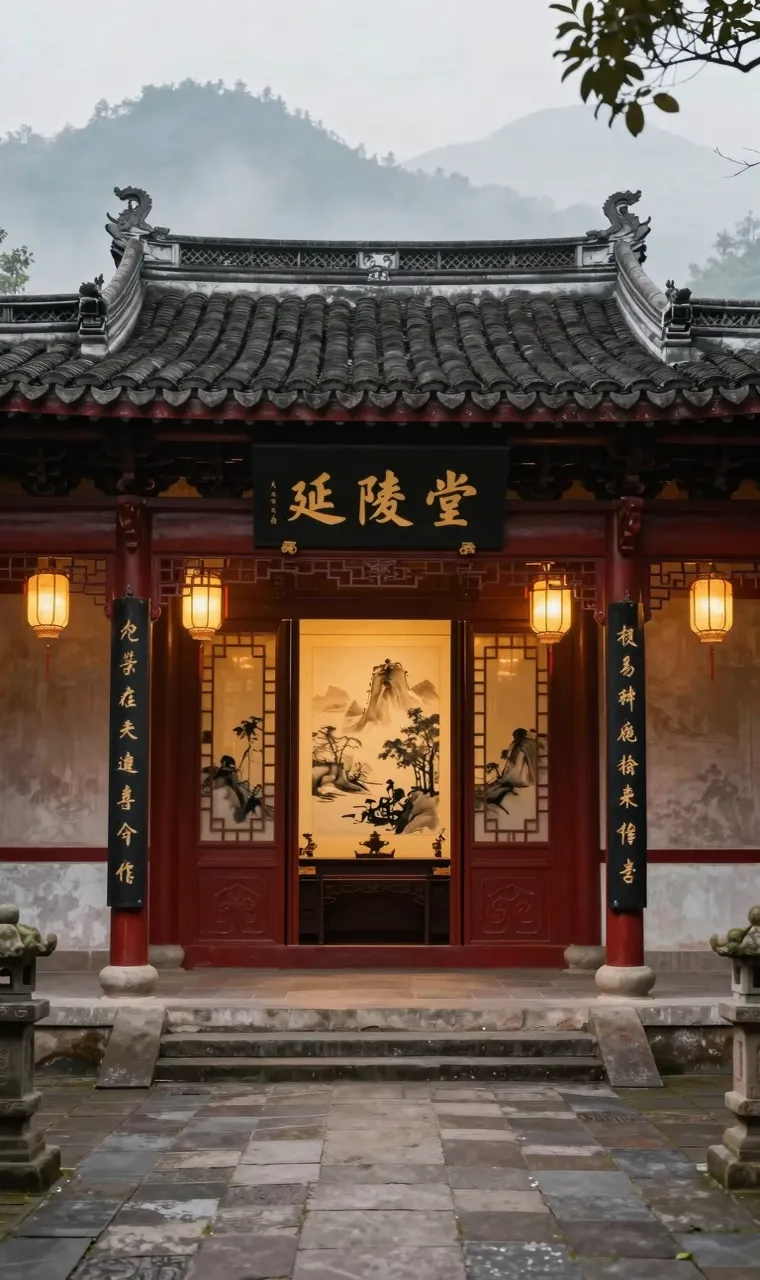
Ahnentempel des Wu-Clans in Yanling, Jiangsu – Zu Ehren von Wu Zixu, dem legendären Staatsmann des Staates Wu. Der Tempel bewahrt alte Ritualgefäße und Clan-Genealogien.
Clan-Motto & Familientradition
延陵世泽,让国家风 — Das Erbe von Yanling; die Tradition der Thronabtretung setzt sich fort.
Berühmte Personen mit Nachnamen Wu
King Fuchai of Wu
吴王夫差
reigned 495 – 473 BC
KingLast ruler of the state of Wu whose doomed rivalry with Goujian of Yue became one of the most retold cautionary tales of hubris and revenge in Chinese history.
Wu Daozi
吴道子
c. 680 – 760
PainterTang dynasty master revered as the 'Sage of Painting', whose flowing brushwork on Buddhist and Daoist murals set the standard for Chinese figure painting.
Wu Cheng'en
吴承恩
c. 1500 – 1582
NovelistMing dynasty author of 'Journey to the West' (西游记), the immortal mythological novel of the Monkey King that has shaped East Asian imagination for centuries.
Ton-Verträglichkeit
Wu (Wú) ist ein Nachname mit 2. Ton (steigend). In der chinesischen Namensgebung erzeugen ausgewogene Tonmuster harmonisch klingende Namen.
Empfohlene Muster
friedlich und sicher
weit und glückverheißend
strebende Ambition
Zu vermeidende Muster
Jede Ziffer ist ein Ton (1=flach, 2=steigend, 3=fällend-steigend, 4=fällend). Die erste ist der Ton des Nachnamens; die nächsten beiden sind die des Vornamens.
Beispielnamen mit Wu
Ihre Wu Familienlegende
Beliebte chinesische Namenssammlungen
Namenswerkzeuge
Glücksbringend & Propitziv
Wollen Sie Ihren eigenen einzigartigen chinesischen Namen?
Unsere Engine erstellt personalisierte Namen basierend auf Ihrem englischen Namen und bevorzugtem Stil.
Probieren Sie den Namensgenerator→Häufig Gestellte Fragen
Was bedeutet der chinesische Nachname Wu?
Der Nachname Wu (吴) bezieht sich auf den alten Staat Wu im Jangtse-Delta. Sein Schriftzeichen kombiniert 口 (Mund) und 天 (Himmel), was möglicherweise 'laut sprechen' oder 'verkünden' bedeutet. Er repräsentiert die reiche Kultur Südchinas, insbesondere der Jiangnan-Region, bekannt für ihre Eleganz, ihren Wohlstand und ihre Verfeinerung.
Woher stammt der Nachname Wu?
Der Nachname Wu geht auf Taibo zurück, den ältesten Sohn von König Tai von Zhou, der freiwillig auf seinen Thron verzichtete, nach Süden floh und den Staat Wu gründete. Seine Nachkommen übernahmen Wu als ihren Nachnamen. Ein weiterer Zweig stammt aus dem Staat Wu der Zeit der Frühlings- und Herbstannalen, der vom Staat Yue erobert wurde.
Welche berühmten Personen haben den Nachnamen Wu?
Wu Zetian (624–705), die einzige Kaiserin in der chinesischen Geschichte. Wu Cheng'en (1500–1582), Autor der 'Reise nach Westen'. Wu Yi (geboren 1938), eine ehemalige Vizepremierministerin Chinas. Wu Yifan (geboren 1990), ein Sänger und Schauspieler (Kris Wu).
Welche Vornamen passen zum Nachnamen Wu?
Vornamen für Wu spiegeln oft seine südliche Eleganz und kulturelle Fülle wider. Namen wie Wu Yan (艳, 'prächtig') oder Wu Qing (清, 'klar') rufen Verfeinerung hervor. Für eine gelehrt Note ergänzen Wu Wen (文, 'Literatur') oder Wu Zhi (智, 'Weisheit') das Erbe des Nachnamens. Vermeiden Sie zu rustikale Namen, da Wus Jiangnan-Konnotation gut mit anmutigen oder kultivierten Zeichen harmoniert.