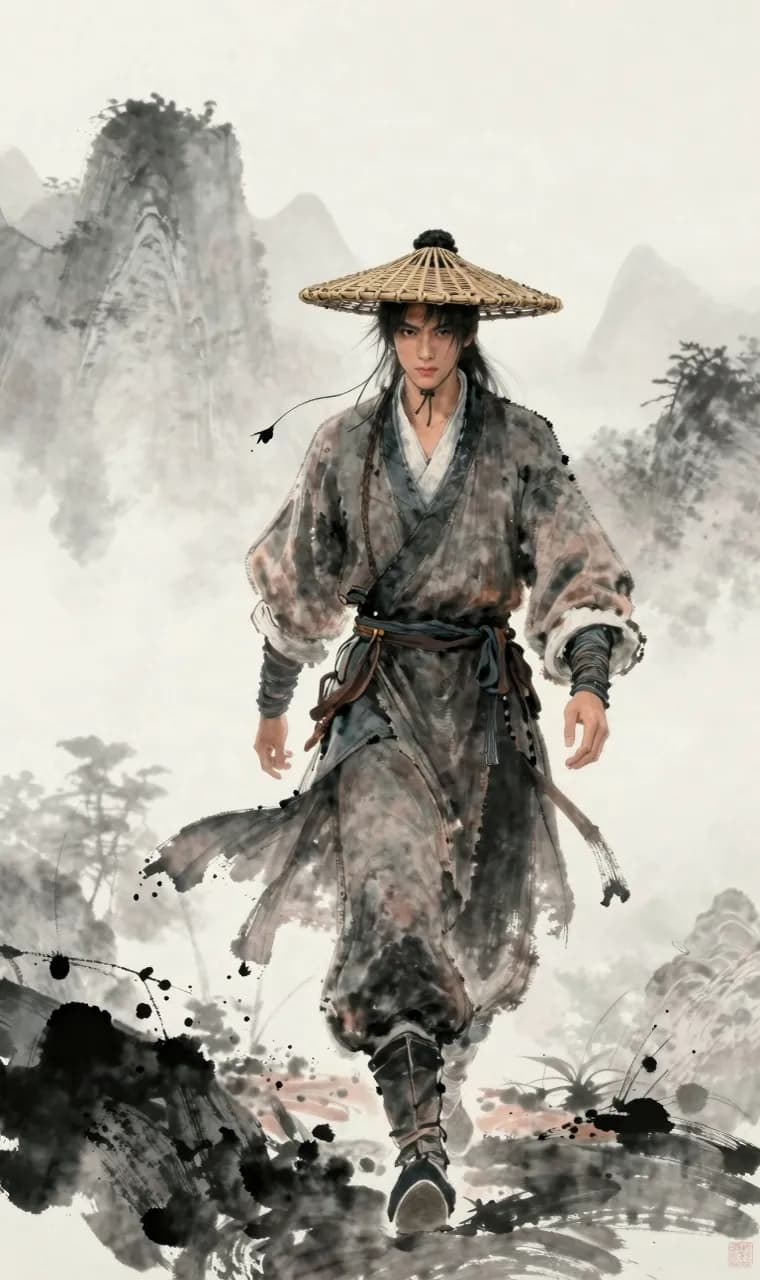
云飞扬 (Yún Fēiyáng)
Yún Fēiyáng
날아다니는 구름
의미 및 문화적 맥락
자유분방하고 구속받지 않으며, 끝없는 하늘을 나는 구름과 같습니다.
📖문화적 배경
이 이름은 하늘을 자유롭게 떠다니는 구름의 이미지를 포착하여, 근심 없고 자유분방한 정신을 상징합니다. 도교의 소요유 이상을 연상시킵니다. 게임이나 이야기에서 자유분방한 캐릭터에 적합하며, 무한한 자유와 자연스러운 우아함을 불러일으킵니다. '비양'은 또한 높은 포부를 암시합니다.
맞춤형 중국어 이름을 원하세요? 이름 생성기를 시도해보세요!
내 이름 생성이름 종합 점수
Each character has deep cultural significance with rich poetic and historical references
Multi-character name has rich tonal layering. Moderate tonal variation. Adjacent syllables have well-contrasted tones. Syllable lengths are balanced and easy to pronounce
Moderate stroke count
Single five-element attribute (water), pure but limited in variety
Three-character name has a traditional, grounded feel
고전 시조
이 이름은 고전 중국 시의 울림을 담고 있습니다:
「行到水穷处,坐看云起时」
Walking to where the stream runs dry, I sit and watch the clouds rise
— Wang Wei, 'My Retreat at Mount Zhongnan'
When the path ends where the stream dries up, I sit and watch the clouds gather — a serene acceptance of life's natural course.
「曾经沧海难为水,除却巫山不是云」
Having seen the vast ocean, no other water can compare; having beheld the clouds of Mount Wu, no other clouds are worthy
— Yuan Zhen, 'Thoughts of Parting'
Having witnessed the boundless ocean, no other water suffices; having seen the clouds above Mount Wu, no others are worthy — a love so deep it eclipses all else.
「浮云游子意,落日故人情」
Floating clouds mirror the wanderer's thoughts; the setting sun reflects an old friend's feelings
— Li Bai, 'Farewell to a Friend'
Drifting clouds resemble the wanderer's restless path; the setting sun mirrors an old friend's lingering sorrow — a classic farewell poem.
「飞流直下三千尺,疑是银河落九天」
The waterfall plunges three thousand feet; it seems the Milky Way has tumbled from the ninth heaven
— Li Bai, 'Viewing the Lushan Waterfall'
The waterfall cascades three thousand feet down — one might think the Milky Way has poured from the highest heavens — a scene of overwhelming grandeur.
「两个黄鹂鸣翠柳,一行白鹭上青天」
Two golden orioles sing among the emerald willows; a row of white egrets soars into the blue sky
— Du Fu, 'Quatrain'
Two golden orioles sing in the green willows, a line of white egrets rises into the blue sky — a vividly colored painting in poetry.
문자 변천
각 한자가 3000년 이상의 중국 문자 역사 속에서 어떻게 변화해 왔는지 살펴보세요.
In oracle bone script,「云」resembles rolling clouds in the sky — a pure pictograph. The upper part is the cloud layer, the lower part is the trailing cloud wisps.
In bronze script,「云」gained a「雨」(rain) header, becoming「雲」— emphasizing the relationship between clouds and rain.
In seal script,「云」has two forms:「云」(the cloud-vapor pictograph) and「雲」(with the rain header added). The 'Shuowen' explains: 'Yun is the breath of mountains and rivers.'
From the simplest cloud pictograph, to the complex form「雲」with the rain header, and back to the simplified form that returns to the ancient original — a full circle. Clouds symbolize loftiness, freedom, and effortless grace.
In oracle bone script,「飞」resembles a bird with wings spread wide in flight — a quintessential pictograph.
In bronze script, the image of「飞」became more vivid, with the bird's spread-wing posture clearly visible.
In seal script,「飞」resembles a bird with both wings outspread. The 'Shuowen' explains: 'Fei means a bird taking flight.'
From the flying bird image of oracle bone script to the streamlined form of simplified Chinese — though the strokes were greatly reduced, the imagery of flight remains unchanged. Using「飞」in a name signifies soaring ambition and limitless horizons.
이 이름을 사용할 때
자주 묻는 질문
중국어 이름 云飞扬(Yún Fēiyáng)은 무슨 뜻인가요?
云飞扬(Yún Fēiyáng)은 중국어로 "날아다니는 구름"을(를) 의미합니다. 자유분방하고 구속받지 않으며, 끝없는 하늘을 나는 구름과 같습니다.
云飞扬은 중국어로 어떻게 발음하나요?
云飞扬은 중국어 만다린에서 "Yún Fēiyáng"으로 발음합니다. 정확한 발음을 위해 각 음절의 성조를 주의 게세 연습하세요.
언제 云飞扬이라는 이름을 사용해야 하나요?
云飞扬은 게임 닉네임, 소셜 미디어 프로필, 언어 학습, 창작 글쓰기에 적합한 다용도 중국어 이름입니다.
띠별 궁합
한자 부수 구조를 기반으로 이 이름과 각 띠의 궁합을 분석합니다.