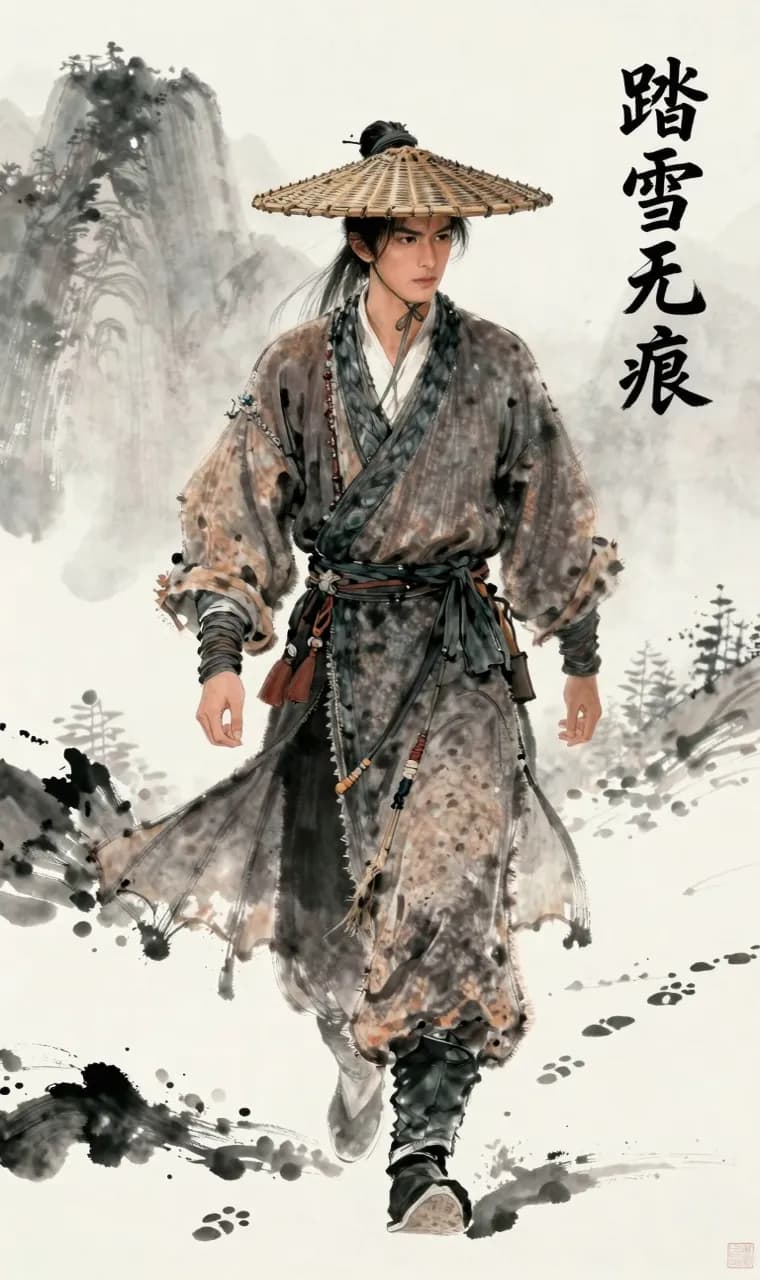
踏雪 (Tàxuě)
Tàxuě
Pisar la nieve
Significado y Contexto Cultural
Caminar sobre la nieve sin dejar huellas: la máxima expresión del qinggong (habilidad de ligereza).
📖Antecedentes culturales
踏雪 (Tàxuě) evoca el legendario qinggong (habilidad de ligereza) de la ficción wuxia, donde los maestros pueden caminar sobre la nieve sin dejar huellas, un símbolo de habilidad marcial suprema y gracia etérea. El nombre aparece en cuentos clásicos como 'La leyenda de los héroes del cóndor', donde la ligereza es tanto una hazaña física como una metáfora de la libertad de las cargas mundanas. Es perfecto como alias de juego (especialmente para personajes ágiles), un nombre poético para redes sociales, o incluso un nombre artístico para bailarines o acróbatas. Culturalmente, la nieve representa pureza y fugacidad, mientras que 'pisar' implica acción deliberada y sin esfuerzo: un equilibrio de fuerza y delicadeza.
¿Quieres un nombre chino personalizado? ¡Prueba nuestro generador!
Generar el MíoPuntuación integral del nombre
Each character has deep cultural significance with rich poetic and historical references
Two-character name has good tonal rhythm. Moderate tonal variation. Adjacent syllables have well-contrasted tones
Balanced stroke complexity with elegant structure. Characters have well-balanced stroke counts
Single five-element attribute (water), pure but limited in variety
Two-character name feels modern and stylish
Referencias de poesía clásica
Este nombre lleva ecos de la poesía clásica china:
「忽如一夜春风来,千树万树梨花开」
As if a spring breeze swept through the night, ten thousand pear trees burst into bloom
— Cen Shen, 'Song of White Snow in Farewell to Secretary Wu'
As if overnight a spring breeze arrived and ten thousand pear trees blossomed — the immortal verse comparing winter snow to spring flowers.
「孤舟蓑笠翁,独钓寒江雪」
An old man in a straw raincoat and bamboo hat in a lone boat, fishing alone on the cold snowy river
— Liu Zongyuan, 'River Snow'
A lone boat, an old man in a rain hat, fishing alone on a freezing river — an image of noble solitude.
「梅须逊雪三分白,雪却输梅一段香」
The plum blossom yields to the snow in whiteness, but the snow falls short of the plum's fragrance
— Lu Meipo, 'Snow and Plum'
The plum blossom cannot match the snow's pure white, and the snow lacks the plum's sweet fragrance — each has its own strengths.
Evolución del carácter
Explore cómo cada carácter evolucionó a lo largo de más de 3000 años de historia de la escritura china.
In oracle bone script,「雪」has「雨」(rain) above and「彗」(broom) below — meaning rain that can be swept, i.e., snow.
In bronze script,「雪」continues the oracle bone structure, depicting snowflakes falling beneath rain.
In seal script,「雪」has「雨」above and「彗」below. The 'Shuowen' explains: 'Xue is frozen rain that delights all things' — condensed rainwater that brings joy to the world.
From 'sweepable rain' in oracle bone script, to the rich cultural connotations of 'as clever as ice and snow' and 'sending charcoal in snowy weather' —「雪」in a name symbolizes purity, intelligence, and noble character.
Cuándo Usar Este Nombre
Preguntas frecuentes
¿Qué significa el nombre chino 踏雪 (Tàxuě)?
踏雪 (Tàxuě) significa "Pisar la nieve" en chino. Caminar sobre la nieve sin dejar huellas: la máxima expresión del qinggong (habilidad de ligereza).
¿Cómo se pronuncia 踏雪 en chino?
踏雪 se pronuncia "Tàxuě" en chino mandarín. Practique cuidadosamente el tono de cada sílaba para una pronunciación precisa.
¿Cuándo debo usar el nombre 踏雪?
踏雪 es un nombre chino versátil adecuado para nombres de usuario en juegos, perfiles de redes sociales, aprendizaje de idiomas y escritura creativa.
Compatibilidad zodiacal
Verifique qué signos zodiacales combinan bien con este nombre según los radicales de los caracteres.