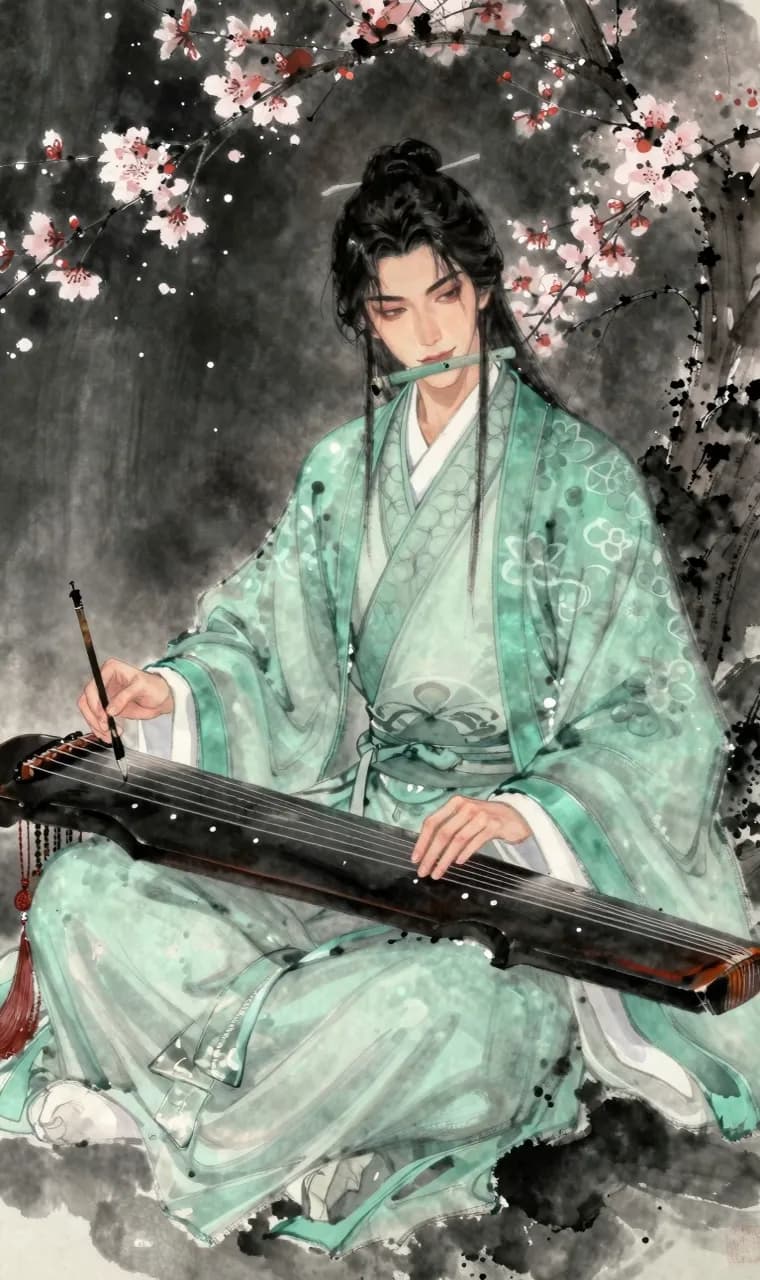
琴心 (Qínxīn)
Qínxīn
Corazón de Laúd
Significado y Contexto Cultural
Una guerrera cuya alma habla a través de la música. El laúd guqin era el arma de los eruditos: la belleza sobre la brutalidad.
📖Antecedentes culturales
Qinxin (琴心) combina 'laúd' (guqin) y 'corazón', simbolizando un alma que se expresa a través de la música. En la tradición china, el guqin era el instrumento de eruditos y sabios, una herramienta para el cultivo personal y la expresión emocional. Este nombre es perfecto para una guerrera cuya verdadera fuerza reside en el arte: una 'artista marcial' que gana a través de la belleza y la armonía. Evoca la historia de Sima Xiangru y Zhuo Wenjun, donde la música transmitía amor. Ideal para un personaje gentil pero poderoso.
¿Quieres un nombre chino personalizado? ¡Prueba nuestro generador!
Generar el MíoPuntuación integral del nombre
Contains culturally rich characters with traceable literary origins
Two-character name has good tonal rhythm. Moderate tonal variation. Adjacent syllables have well-contrasted tones. Syllable lengths are balanced and easy to pronounce
Moderate stroke count
Single five-element attribute (fire), pure but limited in variety
Two-character name feels modern and stylish. Low total stroke count is minimalist and easy to write
Referencias de poesía clásica
Este nombre lleva ecos de la poesía clásica china:
「洛阳亲友如相问,一片冰心在玉壶」
If friends and kin in Luoyang ask of me, tell them my heart is like ice in a jade vessel — pure and clear
— Wang Changling, 'Farewell to Xin Jian at Furong Pavilion'
If my loved ones in Luoyang ask about me, tell them my heart is as pure as ice within a jade pitcher — steadfast in integrity.
「但愿人长久,千里共婵娟」
May we all be blessed with long life, sharing the beauty of the moon across a thousand miles
— Su Shi, 'Water Melody'
Though the poem lacks the character '心' (heart), every line comes from the truest heart
I only wish us all long life, so that even across a thousand miles, we may share the beauty of the moon together.
Evolución del carácter
Explore cómo cada carácter evolucionó a lo largo de más de 3000 años de historia de la escritura china.
In oracle bone script,「心」resembles a cross-section of the heart — the center is the ventricle, and the left and right parts are the atria.
In bronze script, the heart form of「心」became clearer, emphasizing the outlines of the pericardium and ventricles.
In seal script,「心」resembles the shape of a seated pregnant woman — the ancients' depiction of the heart's position in the body. The 'Shuowen' explains: 'Xin is the human heart.'
From the anatomical depiction of the heart, to the core of emotion and thought — in Chinese culture,「心」is both a physical organ and the vessel of thinking and feeling.
Cuándo Usar Este Nombre
Preguntas frecuentes
¿Qué significa el nombre chino 琴心 (Qínxīn)?
琴心 (Qínxīn) significa "Corazón de Laúd" en chino. Una guerrera cuya alma habla a través de la música. El laúd guqin era el arma de los eruditos: la belleza sobre la brutalidad.
¿Cómo se pronuncia 琴心 en chino?
琴心 se pronuncia "Qínxīn" en chino mandarín. Practique cuidadosamente el tono de cada sílaba para una pronunciación precisa.
¿Cuándo debo usar el nombre 琴心?
琴心 es un nombre chino versátil adecuado para nombres de usuario en juegos, perfiles de redes sociales, aprendizaje de idiomas y escritura creativa.
Compatibilidad zodiacal
Verifique qué signos zodiacales combinan bien con este nombre según los radicales de los caracteres.