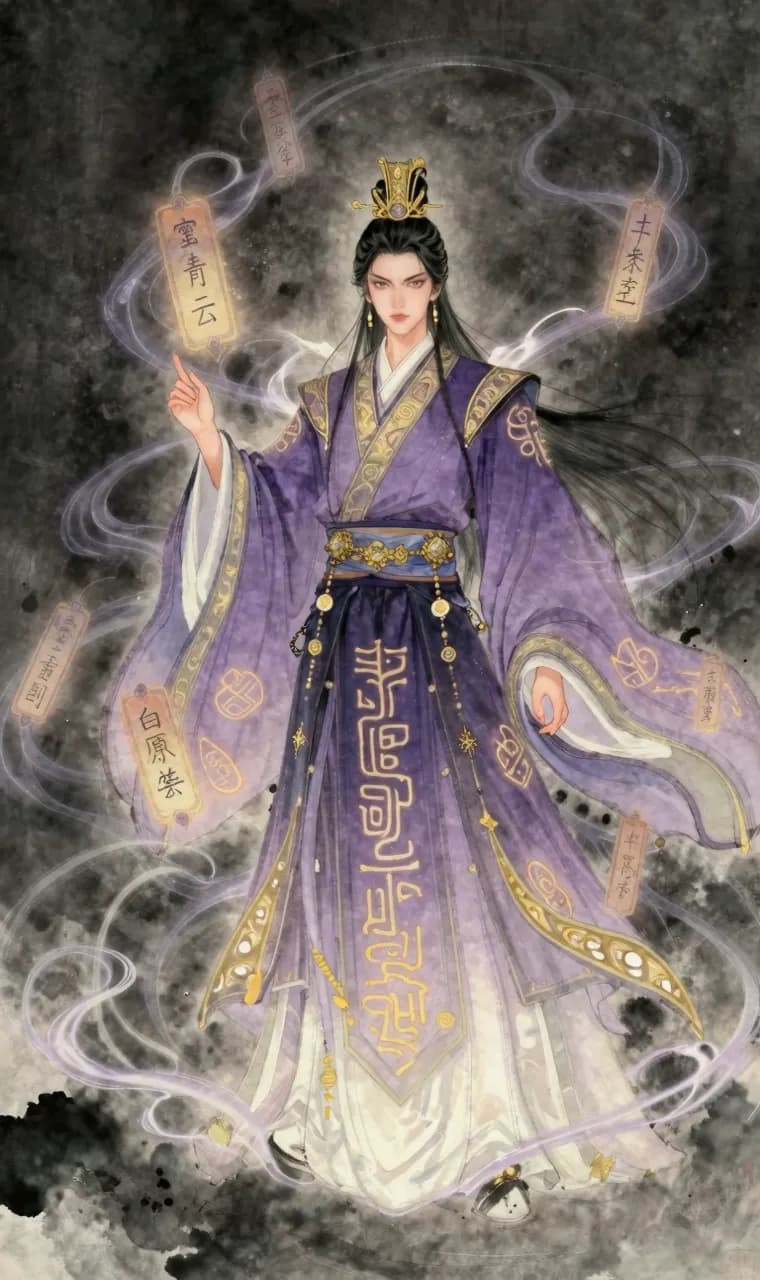
青云 (Qīngyún)
Qīngyún
Nubes Azules
Significado y Contexto Cultural
Del modismo 'pingbu qingyun' — ascender suavemente a las altas nubes. Un nombre de ambición ilimitada y ascensión espiritual.
📖Antecedentes culturales
'青云' (Nubes Azules) es un modismo clásico chino de 'pingbu qingyun' (平步青云, ascender paso a paso a las nubes azules), que significa un ascenso meteórico a una alta posición o éxito. En la filosofía taoísta, las nubes simbolizan la trascendencia y el camino hacia la inmortalidad. El nombre evoca a una persona de gran ambición y aspiración espiritual, que se eleva por encima de lo mundano. Es adecuado para un personaje en una novela o juego de cultivo, representando a un cultivador en el camino hacia la inmortalidad. Históricamente, muchos eruditos y funcionarios usaron 'qingyun' en sus nombres literarios para expresar ideales elevados.
¿Quieres un nombre chino personalizado? ¡Prueba nuestro generador!
Generar el MíoPuntuación integral del nombre
Each character has deep cultural significance with rich poetic and historical references
Two-character name has good tonal rhythm. Moderate tonal variation. Adjacent syllables have well-contrasted tones. Syllable lengths are balanced and easy to pronounce
Moderate stroke count
Single five-element attribute (water), pure but limited in variety
Two-character name feels modern and stylish. Low total stroke count is minimalist and easy to write
Referencias de poesía clásica
Este nombre lleva ecos de la poesía clásica china:
「行到水穷处,坐看云起时」
Walking to where the stream runs dry, I sit and watch the clouds rise
— Wang Wei, 'My Retreat at Mount Zhongnan'
When the path ends where the stream dries up, I sit and watch the clouds gather — a serene acceptance of life's natural course.
「曾经沧海难为水,除却巫山不是云」
Having seen the vast ocean, no other water can compare; having beheld the clouds of Mount Wu, no other clouds are worthy
— Yuan Zhen, 'Thoughts of Parting'
Having witnessed the boundless ocean, no other water suffices; having seen the clouds above Mount Wu, no others are worthy — a love so deep it eclipses all else.
「浮云游子意,落日故人情」
Floating clouds mirror the wanderer's thoughts; the setting sun reflects an old friend's feelings
— Li Bai, 'Farewell to a Friend'
Drifting clouds resemble the wanderer's restless path; the setting sun mirrors an old friend's lingering sorrow — a classic farewell poem.
Evolución del carácter
Explore cómo cada carácter evolucionó a lo largo de más de 3000 años de historia de la escritura china.
In oracle bone script,「云」resembles rolling clouds in the sky — a pure pictograph. The upper part is the cloud layer, the lower part is the trailing cloud wisps.
In bronze script,「云」gained a「雨」(rain) header, becoming「雲」— emphasizing the relationship between clouds and rain.
In seal script,「云」has two forms:「云」(the cloud-vapor pictograph) and「雲」(with the rain header added). The 'Shuowen' explains: 'Yun is the breath of mountains and rivers.'
From the simplest cloud pictograph, to the complex form「雲」with the rain header, and back to the simplified form that returns to the ancient original — a full circle. Clouds symbolize loftiness, freedom, and effortless grace.
Cuándo Usar Este Nombre
Preguntas frecuentes
¿Qué significa el nombre chino 青云 (Qīngyún)?
青云 (Qīngyún) significa "Nubes Azules" en chino. Del modismo 'pingbu qingyun' — ascender suavemente a las altas nubes. Un nombre de ambición ilimitada y ascensión espiritual.
¿Cómo se pronuncia 青云 en chino?
青云 se pronuncia "Qīngyún" en chino mandarín. Practique cuidadosamente el tono de cada sílaba para una pronunciación precisa.
¿Cuándo debo usar el nombre 青云?
青云 es un nombre chino versátil adecuado para nombres de usuario en juegos, perfiles de redes sociales, aprendizaje de idiomas y escritura creativa.
Compatibilidad zodiacal
Verifique qué signos zodiacales combinan bien con este nombre según los radicales de los caracteres.